
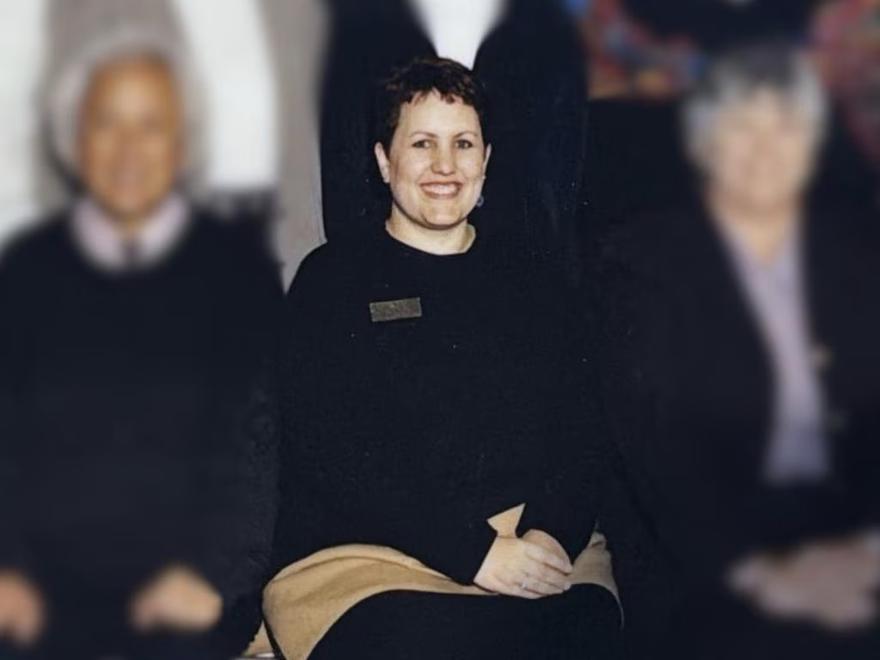
Fifteen years ago, I left a career I loved in the middle of an ordinary Wednesday afternoon… and I never went back.
That morning I had been in my best suit and shiniest shoes at a grand affair in the city: the launch of the Education Department’s new behaviour management policy, complete with the Minister and lots of speeches. As the representative for special schools, I’d spent two years arguing it still did not go far enough for children with extreme, often violent behaviours. But we were making progress, so I turned up as required.
During one of the speeches, my phone buzzed. There had been a critical incident at my school. A nine-year-old boy had seriously injured one of my staff. The teacher was on her way to hospital.
I did not stay for the scones. I drove straight back and gathered the classroom team.
This was not a one-off. That class educated eight boys with complex needs, all autistic, all minimally verbal, all with behaviours that were, on a good day, challenging. There were multiple incidents of violence every day: biting, pinching, hitting, absconding. At one point I had 11 of my 28-classroom staff on workers’ compensation because of injuries caused by students. Read that again… 11 out of 28.
The teacher and four assistants in that room were phenomenal; highly skilled, passionate, utterly worn out. We had held endless meetings about this class, brought in specialist psychologists, pulled staff and resources from elsewhere in the school. This team had done everything asked of them, and more.
So, I sat across from my war-torn staff, feeling woefully inadequate, and I offered them three options. You can all go on workers’ comp. You are entitled to. You are all injured, physically or psychologically. But I knew they wouldn’t. Who would take the class? These dedicated people would never leave their teammates short. You can walk back in tomorrow and start afresh, while I keep fighting the system for support that never seemed to come. I didn’t have a third option. So, I turned to my deputy and said, “Lorraine, please ring the regional office. Tell them there’s been an incident, and the principal has walked out.”
And that was that.
For a long time, I believed that was my failure. I had been a teacher, an education officer, the president of a principals’ association, and a leader in increasingly complex schools.
I was experienced. I was capable. I was also utterly exhausted, but I had convinced myself that was simply the price of caring. That I couldn’t take a break because “they couldn't do it without me” and that pushing through was what was required.
What I’ve learned in the 15 years since, across hundreds of conversations with teachers and leaders, is that it was never a personal failure. It was a systemic one.
The demands had not arrived in one catastrophic wave. They had accumulated so slowly that we stopped noticing. Somewhere along the way we took expectations designed for three people and poured them onto one, then called it dedication.
And here’s the trap. The moment teaching is defined by a calling, by a willingness to give everything, the system no longer has to justify asking for more. It’s not an extra demand. It’s just “what the job is”, what you signed up for.
The system counts on that generosity, and it takes advantage of it.
That’s why teachers in Victoria are striking, and why others across the country are barely staying afloat. Not because they’ve grown greedy, or stopped loving the work, but because they’ve finally stopped accepting that one caring professional can absorb everything a system and a society decide to hand them.
If anything, it is harder now than when I left. More accountability, more documentation, more pastoral care, more mental-health responsibility without the training, more testing, more parent demands, fewer support staff, fewer boundaries, fewer genuine breaks. And still, we ask educators to carry it all with grace.
I could not change the system. Goodness knows I tried. But I have come to understand that I had far more agency than I knew, not to fix an impossible role, but to make a deliberate choice about it, rather than push through until something gave way.
So, to every teacher drowning right now: I understand your exhaustion is real, because mine was too. Your overwhelm is also justified. And the sense that this has become unsustainable is not a weakness.
Australia’s education system is broken, and to fix it we must start by listening to teachers because they are the people who understand the classroom best.
Jenny Cole is a former school principal and education leader, and a self-described recovering principal. She is the author of Teach, Lead or Leave.
A version of this article was published by the Herald Sun newspaper on Thursday 30th July 2026 you can access it here

Comments